Column · @milokapd399
ADA Mobile Toilet Requirements for Accessible Portable System Placement
Accessibility gets talked about in broad concepts so typically that the functional details can get lost. That is especially real with momentary sanitation. An event coordinator might spend weeks thinking of ticketing, web traffic flow, fence, and waste pickup, after that realize late while doing so that an ada portable bathroom is not simply one more box to put on a site map. Placement matters. Route matters. Entryway problems matter. The device itself matters.
I have seen accessible planning dealt with well, where the accessible portable bathroom was placed precisely where a guest utilizing a wheelchair would sensibly anticipate to locate it, on a firm path, near to the primary activity. I have additionally seen the contrary, where the so called easily accessible device was practically existing however stranded on unequal ground behind a row of conventional devices, turning a basic demand into a frustrating detour. The difference is rarely around intent alone. It usually comes down to whether the planner comprehends what the ADA really calls for and just how those requirements turn up on the ground.
For mobile commode services in the United States, the managing federal availability standard is the 2010 ADA Standards for Accessible Style, as analyzed by the Gain access to Board and the Division of Justice. That is the support point. If you are preparing ada compliant portable bathrooms for a public occasion, a neighborhood gathering, a park remodelling, or any other short-term setup open to the public, those criteria are the location to start.
The core rule people miss out on first
The scoping need is easy, but it is usually undercounted or misinterpreted. For clusters of mobile solitary individual commode systems, a minimum of 5 percent of the devices in each cluster have to come. The Access Board has actually made clear that this uses even at momentary events.
That expression, "in each collection," matters greater than lots of people recognize. If a website has one bank of devices near the entrance and an additional financial institution near a phase or sports field, the analysis is not nearly the overall variety of systems on the home. Each organizing requires its own appearance. An organizer can not position one ada certified portable commode on one side of a large venue and think that solves availability almost everywhere else.
This is where website judgment is available in. A site plan might look well balanced on paper while still producing actual obstacles in practice. If the easily accessible device is technically within the overall occasion footprint however functionally much where people are gathering, waiting, or seated, visitors might have to travel farther than others for a fundamental need. The ADA is not satisfied by token presence. The available system needs to be component of the functional experience.
That is why conversations about ada portable bathroom demands must never quit at system counts. The criteria handle quantity, yes, however additionally with course, entry problems, steering clearances, and fixture clearances inside the unit.
What makes a portable device accessible
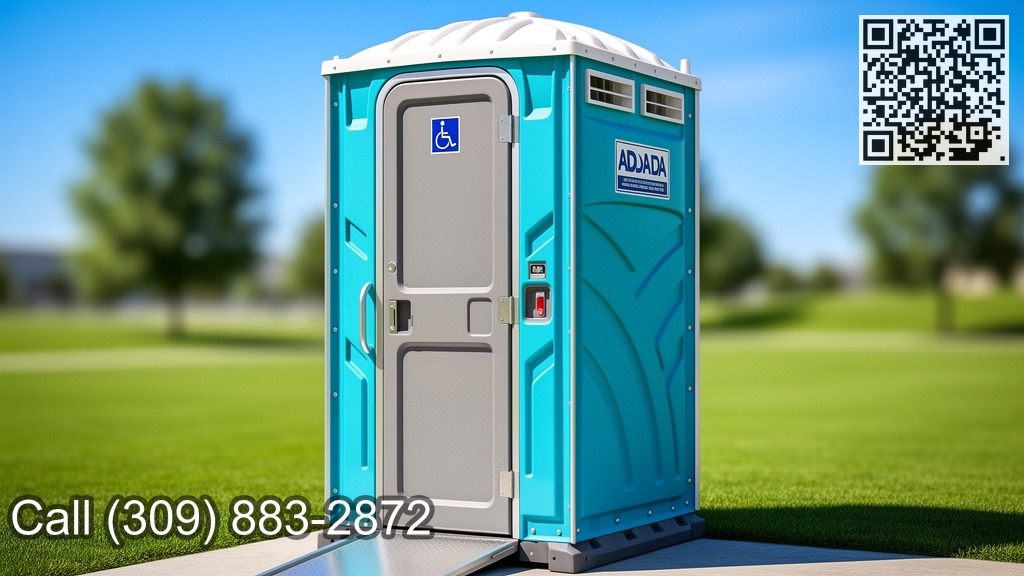
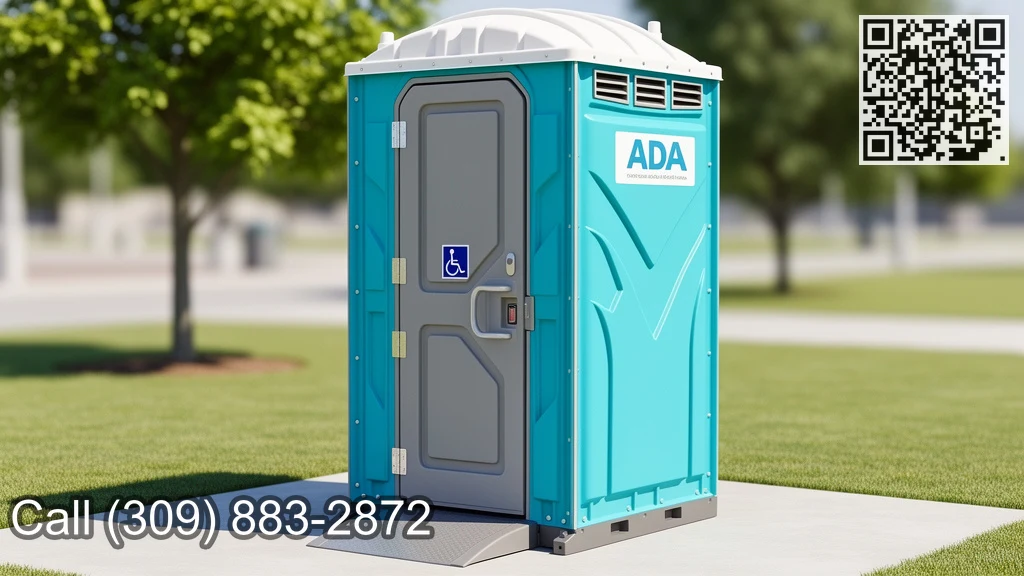
An ada accessible mobile washroom is not just a larger covering with a sticker on the door. The available mobile device should meet suitable toilet area technical requirements. That includes clearances at the component, turning room, and door maneuvering clearances, in addition to relevant grab bar and water storage room clearance rules.
Those are not ornamental upgrades. They are the measurements and useful areas that enable an individual to go into, transform, placement, transfer, and leave safely. When an available device is selected appropriately, it is developed around these technological requirements. When it is picked carelessly, the tag might exist while the interior use drops short.
The system need to likewise be identified with the International Sign of Accessibility. This feels like a tiny point up until you have viewed visitors check a long row of comparable systems from a range. Clear identification stops confusion and saves time. It additionally signifies, before an individual reaches the door, that the system was intended to be component of the available experience rather than an afterthought.
There is likewise a tendency in casual conversation to use a mix of phrases such as ada certified available portable restrooms, ada certified mobile toilets, and ada-compliant portable restrooms interchangeably. That is fine in normal speech, however the actual test is not the expression used in a quote demand. The examination is whether the actual system and its positioning satisfy the ADA requirements. A glossy rental description is not a replacement for compliance.
Placement is where many certified units fail
An obtainable system can be produced correctly and still be terribly positioned. This is one of one of the most common sensible failures.
Portable obtainable units have to have an easily accessible route and accessible entryway. If ramps or landings are needed, those elements also must abide by ADA technical requirements. That implies you can not just drop an ada compliant mobile toilet anywhere the vehicle can discharge it and think the work is done. If a mobility device customer can not reach it along an easily accessible path, or can not come close to the entrance in a usable method, the device may exist without being meaningfully available.
Think concerning what happens on short-term websites. Ground problems transform. Rainfall develops ruts. Gravel changes. Suppliers ask for extra room. Secure fencing gets moved. A course that looked acceptable at shipment can become hard by the time the general public arrives. Short-term setups require a final go through that treats the easily accessible route as a first class requirement, not a box to examine during scheduling.
A couple of placement concerns are entitled to special interest:
- placing the obtainable system on a slope or unequal surface
- tucking the device behind conventional commodes so the method is obstructed
- creating a route that goes across mud, loose crushed rock, or various other unpredictable ground
- adding a ramp or touchdown without validating it meets ADA technological requirements
- locating the only obtainable unit much from the task location served by that cluster
These are not unique side cases. They occur constantly when placement choices are made promptly or handed off without oversight. The solution is generally not dramatic. It is preparing, measurement, and a readiness to book the very best area, not the leftover one, for the ada portable restroom.
Temporary events still count
One of one of the most relentless myths in event planning is that temporary methods less regulated. In my experience, individuals do not always claim that aloud, yet they prepare as if it were true. They assume a weekend break occasion, a someday fundraising event, or a seasonal activation in some way gets even more flexibility than an irreversible facility.
The Gain access to Board's interpretation makes this point clear for mobile toilet clusters: the easily accessible system need uses even at temporary events. Short-term period does not eliminate the demand for obtainable hygiene. If anything, short-lived occasions typically require even more discipline since the atmosphere is much less predictable.
An outside craft fair is an example. The organizer may be leasing all cleanliness devices for just 2 days. Due to the fact that absolutely nothing is long-term, every ease of access component relies on energetic options. Where will certainly the financial institution of devices go. How will certainly guests reach it. Is the easily accessible portable toilet part of the same visitor course as every little thing else, or does it require a detour around obstacles and service lanes. Those questions are not additional. They are the work.
The very same thinking puts on appear food occasions, road races, concerts, and community events. Short-lived logistics are still logistics. The ADA standards do not go away since the event upright Sunday night.
Why "obtainable someplace" is not enough
I have actually discovered a pattern in website planning conversations. A person claims, "We have an ADA system," singular, as though naming it solves the problem. Often that system exists, however it may be connected to the incorrect cluster, put near a solution entrance instead of a visitor course, or separated from the location where the general public really invests time.
This is where the 5 percent policy ends up being more than a number. It pushes organizers to believe cluster by collection, not website broad in the abstract. If a location has several bathroom collections because the impact is big, ease of access needs to show up where the requirement appears. Or else people with specials needs are effectively served by a various map than everybody else.
That produces useful burdens others do not face. A parent coming with an impaired relative might require to leave an activity early and travel further. A guest might need to ask personnel for directions when others can merely follow the crowd. None of this is unimportant. Access to restrooms forms whether people stay, take part, and really feel welcome.
When you hear expressions like ada handicap obtainable mobile washroom in rental conversations, what individuals typically mean is straightforward: they desire an unit that can really be used by people who need available functions. The language may differ, however the planning obligation stays the very same. Location accessible systems where they offer individuals equitably, not just visibly.
The building and construction website distinction
There is one location where people obtain confused because they have actually listened to partial info. The ADA criteria identify mobile bathroom units at building websites made use of solely by building employees. Under the mentioned 1991 requirement, those units are excluded from the portable commode ease of access scoping requirement.
That slim difference does not wipe out the availability demand for basic mobile commode leasings. It does not suggest every jobsite is excluded in every scenario, and it definitely does not suggest public event rentals can neglect availability. It simply implies there is a particular, minimal difference in the requirements that applies to building site devices made use of just by building and construction personnel.
This issues due to the fact that exemption language often tends to spread by word of mouth quicker than context does. A specialist hears "building websites are excluded," and 6 conversations later somebody planning a public road fair assumes the very same rule uses. It does not.
If the portable bathrooms belong to a general public occasion or public facing arrangement, you ought to not count on that building and construction particular difference as cover. The more secure and more accurate strategy is to go back to the actual scoping and technical requirements that relate to accessible portable units.
Choosing the right area on a genuine site
The best placement decisions normally take place prior to the vehicle arrives. When the device is on the ground, moving it might be possible, yet it ends up being harder, slower, and a lot more expensive. Excellent preparation begins with asking where people will really take a trip, queue, gather, and rest.
I like to think about available positioning as an issue of self-respect as high as conformity. If a financial institution of standard devices sits right off the main pedestrian course, yet the available portable bathroom is sent out to the side of the whole lot because it is bigger and "tougher to fit," the message is obvious. The larger footprint should set off earlier preparation, not exile.
There is likewise a refined design issue that turns up typically. Sometimes the simplest discharging area is not the very best public strategy area. Distribution benefit issues, however it ought to not control the final visitor experience. An unit that is simple to drop off yet tough to get to is an inadequate trade.
A functional review prior to final placement normally helps:
- identify each collection, not simply the overall website count
- confirm at the very least 5 percent of solitary individual devices in each cluster are accessible
- verify the easily accessible route and entrance to every obtainable unit
- check whether any ramp or landing needed have to fulfill ADA technological requirements
- make sure the device is clearly marked with the International Symbol of Accessibility
That short evaluation captures numerous troubles while they are still very easy to repair. It additionally aids when multiple groups are included, such as an event organizer, a rental business, a site manager, and a facilities coordinator. Accessibility gaps typically happen in handoffs.
What occupants ought to ask, and what service providers must answer
A client organizing an ada mobile commode rental does not need to be an attorney or code professional, yet they do need clear solutions. Obscure assurances prevail in quick relocating services. "Yes, we have ADA devices" is a beginning, not the finish.
The much better conversation seems a lot more specific. Which systems in which collections will certainly be accessible. Just how will those systems be noted. What path will attendees make use of to reach them. If a ramp or touchdown is involved, has any person examined those problems against ADA technical requirements. Is the available system placed with the very same idea provided to convenience and presence as the common units.
Providers who operate in this space consistently often tend to comprehend that a certified system can still be badly deployed. Clients need to expect that awareness. It is not quibbling. It is the difference in between renting out equipment and offering access.
For larger occasions, it additionally assists to take another look at positioning quickly before opening up. Momentary sites are fluid. Barriers relocate. Utilities appear. Supplier booths broaden. A last minute shift can inadvertently block the path to an ada compliant portable bathroom even if the original placement was audio. Access requires one last set of eyes after all the other items have settled.
Compliance is taking place in a broader environment
Accessibility enforcement does not exist in isolation. One relevant trend is that ADA compliance is being imposed in a wider setting throughout sectors. The Department of Justice released support in April 2026 that prolonged the due date for state and local government internet and mobile access rules to April 26, 2027 for larger entities. That growth has to do with electronic availability, not portable toilets, however it shows something crucial: ADA compliance stays energetic, visible, and quite on the radar.
Why reference that in a conversation regarding portable devices? Due to the fact that it reveals that availability is not fading right into the history as a reduced top priority detail. Organizations are being asked, in numerous contexts, to take availability seriously and operationalize it. Physical gain access to at short-lived sites belongs because exact same society of responsibility.
For towns, public agencies, occasion marketers, and home supervisors, this broader setting should be a hint to tighten the basics. If your group is already believing thoroughly about electronic access, public interaction, and inclusive services, the very same self-control must put on sanitation planning. An ada certified mobile washroom is one item of a larger pattern: seeing to it individuals can actually participate.
The human side of placement decisions
The language of standards can appear completely dry, yet the experience is not. When an easily accessible system is positioned appropriately, many people barely notice the preparation behind it. That is a great outcome. The guest that needs it can discover it, reach it, enter it, utilize it, and go on with their day.
When placement goes wrong, the problem lands on the person who already has the least margins for hassle. They are the one https://claytongujr889.talesignal.com/posts/what-makes-an-ada-compliant-portable-toilet-rental-accessible searching longer, taking a trip further, or requesting for help in a setup where everyone else is relocating easily. That is why compassion belongs in compliance work. It hones judgment.
There is no virtue in making ease of access made complex when the governing ideas are actually simple. Give the required variety of easily accessible systems in each collection. Usage devices that fulfill the appropriate toilet space technical demands. Mark them with the International Sign of Access. Ensure the easily accessible course and entrance are truly accessible, and make sure any needed ramps or touchdowns meet ADA technical requirements.
That is the heart of ada mobile bathroom demands as they connect to placement. Not symbolic accessibility, genuine access. Not a system parked someplace on site, an unit people can reasonably and individually usage. When coordinators deal with those information as crucial as opposed to optional, easily accessible portable restrooms stop being an afterthought and start doing what they are supposed to do: offering the general public with dignity.
 Ask ChatGPT
 Ask Grok
 Ask Perplexity
 Ask Claude
 Ask Google AI
 Ask You